
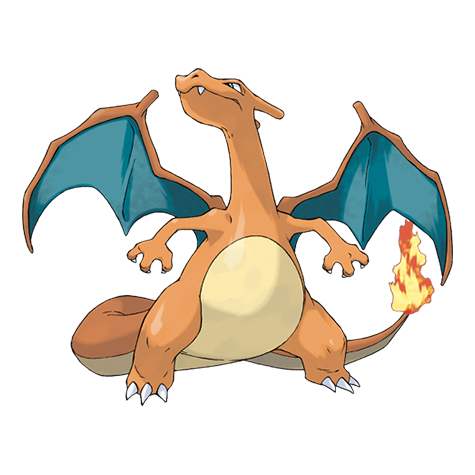
A shiny Charizard always starts the same way: hunting a shiny Charmander (or Charmeleon) and evolving it. Charmander has been available in some form in nearly every mainline generation, so here's every game where you can find one, what system each runs on, and how to actually hunt it - with extra depth on the Switch and Switch 2 games where it matters most.
Red, Blue, and Green (Game Boy). The original method: Charmander is one of the three starters Professor Oak offers at the very beginning. Shiny Pokemon didn't exist yet in Generation I, so there's no shiny hunting here - this entry is just for completeness on where the line begins.
Yellow (Game Boy). Since Pikachu is the forced starter in Yellow, Charmander instead comes as a gift from a trainer on Route 24 after you've progressed far enough. Same as Red/Blue/Green, Generation I predates shinies entirely.
Gold, Silver, and Crystal (Game Boy Color). Charmander isn't obtainable inside these games directly - the only route in is trading one over from a Generation I game via the Time Capsule. This is where Gen I's shiny mechanic gets strange: shininess wasn't displayed as a visual trait until Gen II introduced it, but the underlying DVs (the precursor to IVs) that Gen II's shiny formula checks were already being generated on every Pokemon back in Red, Blue, and Yellow. A Pokemon turns out shiny in Gen II if its Attack DV is 2, 3, 6, 7, 10, 11, 14, or 15, and its Defense, Speed, and Special DVs are all 10, odds of roughly 1-in-8192, identical to hunting directly in Gen II. So it was technically possible to already be carrying a shiny Pokemon while still playing Gen I, you just had no way to see it, target it, or confirm it. The only way to find out was to trade that Pokemon through the Time Capsule into Gold, Silver, or Crystal, where the game would finally render it in its shiny colors.
Ruby, Sapphire, and Emerald (Game Boy Advance). Same story as Gen II: no wild Charmander or starter option in Hoenn. You'll need to trade one in from FireRed or LeafGreen.
FireRed and LeafGreen (Game Boy Advance). These Gen I remakes bring back the original starter choice, Charmander included, complete with modern shiny odds (1-in-8192 in Gen III). It's a fully valid, if slow, shiny hunt via repeated soft resets.
Diamond, Pearl, and Platinum (Nintendo DS). Charmander isn't native to Sinnoh. The only way in is migrating one from a Game Boy Advance game through Pal Park, which brings its shininess with it but doesn't let you hunt fresh ones in-game.
HeartGold and SoulSilver (Nintendo DS). After defeating Red at Mt. Silver, Professor Oak offers a choice of the three original Kanto starters, Charmander among them. It's a standard gift Pokemon, so soft-resetting in front of the offer is a legitimate (if patience-testing) shiny hunt.
Black, White, Black 2, and White 2 (Nintendo DS). No wild or gift Charmander in Unova. Getting one means transferring in from an earlier game via Poke Transfer or the old Dream World service.
X and Y (Nintendo 3DS). After reaching Professor Sycamore's lab as champion, he offers a choice of Kanto starter, and this one is notable: unlike most later gift Pokemon, this Charmander is not shiny-locked, so soft-resetting in front of Sycamore is a genuine shot at a shiny.
Omega Ruby and Alpha Sapphire (Nintendo 3DS). No native Charmander in this Hoenn remake either; trading in from X/Y is the only route.
Sun and Moon (Nintendo 3DS). Charmander isn't in the Alola dex in the base games - trading is required.
Ultra Sun and Ultra Moon (Nintendo 3DS). These add a wild Charmander encounter on Route 3, but only on in-game Sundays, and only around level 12. It's a narrow window, but it's a real wild encounter you can reset for.
Let's Go, Pikachu! and Let's Go, Eevee! (Nintendo Switch). Charmander is wild on Route 3, Route 4, and in Rock Tunnel, plus available as an early Route 24 gift. This is also the game where the Catch Combo system comes in: chaining consecutive Charmander catches raises the shiny rate in tiers, from the base 1-in-4096 under a combo of 10, up to 1-in-512 at a combo of 21-30, and better still at 31 and beyond. Long combos are also how Charizard itself starts appearing as an ultra-rare wild spawn, on top of whatever you get from evolving your hunted Charmander.
Sword and Shield (Nintendo Switch). There's a free Charmander gift from Leon in Postwick after becoming Champion, but it's shiny-locked, so it won't help a shiny hunt directly. Charmander does appear as a wild Max Raid Den encounter, though, which isn't locked, and standard breeding - Nursery, a foreign-language Ditto for the Masuda Method, and the Shiny Charm once the Pokedex is complete - remains the most reliable method.
Brilliant Diamond and Shining Pearl (Nintendo Switch). Charmander is a wild encounter in the Grand Underground, specifically the Volcanic Caves, Sandsear Caves, and Typhlo Cavern hideaway types, but only after obtaining the National Pokedex. Grand Underground spawns can be reset by leaving and re-entering a Secret Base area, making this a workable direct hunt.
Legends: Arceus (Nintendo Switch). Worth noting for completeness: Charmander was left out of the Hisui Pokedex entirely, the first mainline game to omit it. There's nothing to hunt here.
Scarlet and Violet base game (Nintendo Switch). Charmander doesn't spawn in the wild in base Paldea, so you'll need to bring one in via Pokemon HOME first, then breed it at a Picnic with a foreign Ditto for the Masuda Method. Eating an Egg Power sandwich speeds up egg generation, a Flame Body Pokemon like Talonflame or Volcarona in your party cuts hatch time, and completing the Pokedex unlocks the Shiny Charm for roughly a 1-in-512 combined rate. Charizard itself also appears as a Tera Raid boss during events, but that Charizard is shiny-locked - useful as a battle, not as a hunt.
Scarlet and Violet: The Indigo Disk DLC (Nintendo Switch). The most direct method on any current-gen game: Charmander is a genuine wild spawn in the Terarium's Savanna biome, unlocked by completing the "Boost Biodiversity" Support Board request there. An Encounter Power: Fire sandwich raises the odds of running into Charmander specifically, and a Sparkling Power sandwich temporarily boosts the shiny rate for a set number of encounters, turning this into a proper overworld shiny hunt rather than a breeding project.
Legends Z-A (Nintendo Switch and Nintendo Switch 2). Charmander becomes available in Wild Zone 20 after finishing the main story. Fast-traveling out of and back into the zone resets its spawns entirely, so reset-and-rescan is the core loop. Mable's postgame research reward gives a Shiny Charm at level 50, pushing the odds to roughly 1-in-1024.
Pokemon GO (iOS and Android). Shiny Charmander has been catchable since a Community Day back in May 2018, and Charmander Community Days have recurred since, each offering a bonus exclusive move on evolution into Charizard during the event window. Outside of Community Day, shiny Charmander can turn up from ordinary wild spawns and eggs at GO's flat rate of roughly 1-in-500, regardless of weather. Charizard itself is also a six-star Max Battle boss with boosted shiny odds during active raid hours, making it one of the only games where you can encounter shiny Charizard directly rather than needing to evolve one.
Pokemon Champions (Nintendo Switch and Nintendo Switch 2). There's no catching in Champions at all, so traditional shiny hunting doesn't apply here. A shiny can occasionally show up as a random pull when recruiting at the Roster Ranch, but transferring one in from Pokemon HOME is the far more reliable route.
Pokemon HOME (multi-platform). Whatever game you're actually playing, HOME lets you move a shiny Charmander or Charizard caught anywhere else into it, including from Pokemon GO, which is often the fastest source thanks to its flat, weather-independent rate. If grinding sandwiches, combos, or soft resets doesn't appeal, hunting in whichever game has the best odds and migrating the result afterward is a completely valid strategy.
For Switch and Switch 2 owners specifically, the Indigo Disk's wild Charmander is the most direct hunt available today, Let's Go's Catch Combo system is the only method that can hand you a shiny Charizard without any evolving involved, and Legends Z-A's Shiny Charm plus Wild Zone resets make for the newest hunting loop. Everything older comes down to trading, migrating, or a well-timed soft reset.


Comments (0)
Comments are held for review before they appear publicly. Registered members only.
Sign in to join the discussion.
No comments yet — be the first.