
"Nuzlocke" started as one guy's joke rule set for making Pokémon harder, then became a decade-plus-and-counting genre of self-imposed challenge runs with its own dialects, its own celebrity creators, and its own vocabulary. If you've only heard the word thrown around by a streamer whose whole team just got wiped, here's the fuller picture: where the rules actually came from, what they say, how a webcomic joke spawned an entire family of variants like the Wedlocke, and who's still building on it today.
The whole thing traces back to a single person: Nick Franco, a screenwriting student at UC Santa Cruz, who in March 2010 was playing through Pokémon Ruby while he probably should have been doing coursework. Rather than just power through an old, mostly solved game the normal way, Franco imposed a couple of extra restrictions on himself to make it feel dangerous again, then turned the resulting playthrough into a webcomic called Pokémon: Hard-Mode, which he posted to 4chan's /v/ board.
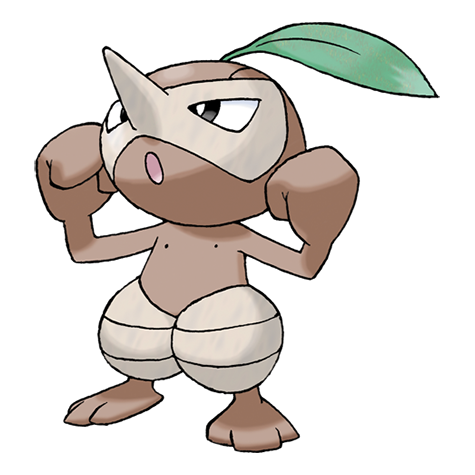
The name "Nuzlocke" isn't actually Franco's own name for it - he called his format "Hard-Mode." It comes from a joke inside the comic itself: Franco drew a Seedot that evolves into a Nuzleaf with the face of John Locke, the survivalist castaway from Lost. Fans reading along started calling the whole ruleset a "Nuzlocke" after that one panel, and the name outlived the comic. Franco's own Ruby run actually ended in a loss to Champion Steven Stone, but rather than kill interest in the format, that honest, on-the-page defeat is largely what got other players hooked on trying it themselves. He kept going with follow-up comics for FireRed and White, and launched a site and forum for people to post their own runs, which is where the format really took off.
Strip away everything that's grown up around it since, and a Nuzlocke only has two mandatory rules. First, you can only catch the first wild Pokémon you encounter in a given route, cave, or area - if it faints or gets away before you catch it, you get nothing from that spot, no do-overs. Second, permadeath: the moment a Pokémon faints in battle, it's treated as dead. It gets moved to a "graveyard" box in the PC and can never be used again, no reviving it with items, no bringing it back for a rematch. Run out of living Pokémon entirely and the challenge is over; you start a new file.
Around those two rules, the community settled on a handful of near-universal etiquette that isn't technically required but that almost nobody skips: nicknaming every Pokémon you catch (the idea being a named character is harder to lose than a stat block), refusing to soft-reset for a better first encounter, avoiding trades with outside players so every Pokémon on the team is "earned" inside the run, and counting a blackout - getting wiped out with zero usable Pokémon in the field - as an instant loss even if you technically still have boxed reserves you never got around to using.
None of that is written down anywhere official; there's no rulebook with a stamp on it. What actually happened over the 2010s is that individual players and streamers kept bolting new restrictions and twists onto Franco's original two rules, and the ones that were fun enough stuck around and got named. A Nuzlocke today isn't really one challenge - it's closer to a genre, with dozens of house rules and full variants layered over the same permadeath-and-first-encounter skeleton.
Some of those additions just tune the difficulty up or down. A Dupes Clause (also called a Species Clause) skips any wild encounter from an evolutionary line you've already caught, so you're not stuck adding a third Zubat to a team that already has two. Set Mode disables the option to switch Pokémon out before a hit lands, removing a common way players dodge death for a favorite. Level caps and no-item runs push the difficulty further in the other direction; a Shiny Clause, letting a player keep a shiny even if it breaks the encounter rule, is one of the more common ways to loosen things back up.
The most influential variant by far is the Wedlocke, created by YouTuber and Pokémon streamer Marriland. A Wedlocke keeps Franco's two original rules - catch only the first eligible encounter per area, fainting means dead - but adds an entire relationship system on top. Pokémon get paired off into male/female "couples" as they're caught, and once paired, that bond is permanent: the two can only be swapped into battle together, never separately, and if one half of a pair dies, its partner has to fight on solo, unable to be swapped out for anyone else, until a new partner is caught for it or it dies too avenging its mate. It turns the emotional stakes of a normal Nuzlocke, already built around permanently losing named Pokémon, into something closer to a soap opera, since losing one Pokémon puts a second one in danger by design. Marriland has run Wedlockes (and straight Nuzlockes) across nearly every mainline game on his channel, and has layered the format further since with crossovers like the Wonderwedlocke, which folds Wonder Trade catches into the same pairing system. (Source: Marriland - Wedlocke Challenge Rules)
Plenty of other named variants have followed. A Wonderlocke replaces normal catches with whatever comes back through Wonder Trade, turning the run into a gamble on what a random stranger sends over. An Egglocke does the same thing with eggs instead, so a player doesn't even know what they got until it hatches. Soul-Link runs pair two players together across two separate save files, where a Pokémon dying on one save forces its linked partner to be boxed on the other, turning a solo challenge into a co-op one. A Hatelocke stretches the no-repeat-species rule across an entire generation, or even a franchise-long series, instead of just one game.
Then there's Ironmon, which barely resembles a traditional Nuzlocke beyond sharing its permadeath DNA. Created by Twitch streamer Caleb "iateyourpie" Bloomer for a heavily randomized version of FireRed and LeafGreen, Ironmon strips out the wild-encounter grind entirely and instead throws players into randomized trainer battles with randomized movesets, items, and Pokémon - explicitly designed, in Bloomer's own words, to not necessarily be fair or even fun so much as unpredictable and hard. It's since spawned its own splinter community and ruleset-tracking sites separate from the mainline Nuzlocke scene. (Source: Bulbagarden)
The format has gotten big enough that it's bled into official channels too. Independent monster-catching games Coromon and Temtem have both shipped built-in, official Nuzlocke modes rather than leaving it purely to player self-discipline. On the Pokémon side, the relationship has been a little messier: in 2022, former Nintendo Minute hosts Kit Ellis and Krysta Yang said they'd been told not to produce Nuzlocke content, treating it similarly to ROM hacks, which caused enough fan backlash that The Pokémon Company International publicly clarified it has no issue with players using the ruleset.
The community around all of this lives mostly on Twitch, YouTube, and Reddit. Marriland's channel is close to the format's home base at this point, spanning both Nuzlockes and Wedlockes across most mainline games. German streamer Jan "PChal" Krüger built a following of close to a million subscribers largely on Nuzlocke content, and has crossed over with fellow streamers like SmallAnt (better known for shiny-only and speedrun-adjacent challenges) and aDrive, widely considered one of the most-watched Pokémon streamers period. On the video side, Polygon's Griffin McElroy ran a 20-episode Pokémon Y Nuzlocke series back in 2016 that's still referenced as one of the format's bigger mainstream moments, and Jaiden Animations introduced a chunk of a younger, animation-first audience to the format with a two-player Nuzlocke video. High-visibility charity streams built around Nuzlockes, including runs by creators like Ludwig, regularly pull hundreds of thousands of concurrent viewers. Off the video platforms, Nuzlocke Forums and Reddit's r/nuzlocke are where a lot of the actual rule debates - and the write-up culture that grew out of Franco's original webcomic - still happen. (Source: It's Super Effective - Griffin McElroy interview)
Fourteen-plus years on, that's the throughline worth remembering: a webcomic joke about a Pokémon drawn with a Lost character's face turned into a shared design document that thousands of players and dozens of streamers have been quietly rewriting ever since. The base rules haven't changed much since 2010. Nearly everything else around them has.
Sources for this piece: Bulbapedia, Wikipedia, ScreenRant, SUPERJUMP, TheGamer, Know Your Meme, Smogon University, EGM, Nuzlocke Forums, and Nuzlocke University.
Comments (0)
Comments are held for review before they appear publicly. Registered members only.
Sign in to join the discussion.
No comments yet — be the first.