
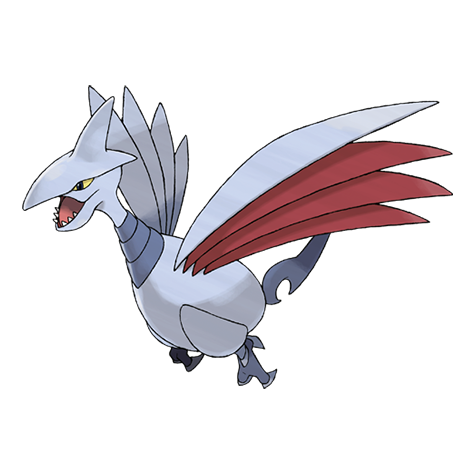
Ironmon looks like a Nuzlocke at a glance: permadeath, streamer bait, brutal odds. It's really its own beast, though, a randomizer challenge that swapped the "catch the first thing you see" rule for something meaner, throwing players into a version of FireRed or LeafGreen where the Pokemon, movesets, items, and even trainer teams have all been shuffled by a script. One player, Twitch streamer SmallAnt, needed 1,786 attempts to beat its hardest tier. Here's where the format came from, what its rules actually say, and why a Skarmory named Della became a small piece of Pokémon streaming history.
Ironmon was created by Twitch streamer Caleb "iateyourpie" Bloomer, known simply as Pie, who built it out around 2020 as a Pokemon Randomizer Challenge for FireRed and LeafGreen. The idea was to keep the permadeath stakes that had already made the Nuzlocke Challenge popular, while cutting the part of a Nuzlocke that eats the most stream time: hunting down a decent first encounter in every single area. Ironmon strips that rule out entirely and instead throws the whole game through a randomizer, so a player might run into a max-level Gyarados on Route 1 or find their starter is suddenly a Machop. What's left standing, Pokemon dying and staying dead, is close enough to a Nuzlocke's DNA that the two get mentioned in the same breath constantly, even though an Ironmon run barely resembles a normal Pokemon playthrough by the time all the randomization settles. (For the fuller history of that shared permadeath lineage, see our own What Is a Nuzlocke? explainer.)
The name for Ironmon's hardest tier, Kaizo, is borrowed from a much older piece of internet history. Kaizo Mario World, a brutally unfair Super Mario World ROM hack from the mid-2000s, took its name from the Japanese word "kaizo" (改造), meaning "remodel" or "restructure." Kaizo Mario World became infamous specifically for breaking every rule of fair level design, invisible blocks, instant-death traps, jumps that assumed frame-perfect execution, and the word "Kaizo" stuck around afterward as shorthand for any ROM hack built to be punishingly, deliberately unfair. Iateyourpie borrowed the label for Ironmon's toughest ruleset for exactly that reason.
Strip away the randomization and Ironmon's actual rules read like a stripped-down Nuzlocke with extra restrictions bolted on. A Pokemon that faints is dead, no reviving it, no rematches. Players are typically restricted to catching or knocking out only one Pokemon per route. Held items are heavily restricted, and shopping is limited to Poke Balls and Repels; anything else has to be found on the ground or handed over by an NPC. In-battle recovery moves and out-of-battle healing items are banned outright, which turns even a routine trainer battle into a real risk. Enemy trainers run at increased levels, and depending on the tier, a player can be locked into using one Pokemon at a time for the whole run, no swapping in a fresh teammate mid-fight.
There are ceiling restrictions too, not just floor ones. Pokemon with a base stat total of 600 or higher are typically banned outright, and legendary, sub-legendary, and mythical Pokemon are off-limits as well, aside from a "favorites clause" that lets a player carve out one specific exception if a legendary happens to be their favorite Pokemon. Evolution can't be blocked either. The community treats the classic tricks players use to keep a Pokemon at a lower evolution stage on purpose, holding B during a level-up evolution, or handing it an Everstone, as against the spirit of the challenge, so both are banned.
What makes Ironmon distinct from most challenge formats is how its difficulty tiers came to exist at all. Standard Ironmon came first, offering the friendliest version of the ruleset. Ultimate Ironmon layered on more restrictions. Kaizo Ironmon, the version that made Ironmon a genuinely mainstream Twitch phenomenon, folds in every prior ruleset at once: randomized everything, inflated trainer levels, one-Pokemon-per-route, no legendaries, banned recovery, the works. Each new, harder tier has only gone public after iateyourpie personally beat the version before it, which is part of why the format has a reputation for being legitimately, provably possible rather than just theoretically survivable. Pie pushed the format further in March 2024 with Super Kaizo, which piled on enhanced trainer AI, held items for every opposing Pokemon, bans on luck-negating abilities like Battle Armor and Shield Dust, six-Pokemon teams for every major boss, and mandatory Pokemon-swapping through the Safari Zone. His debut Super Kaizo stream reportedly pulled in more than 5,000 concurrent viewers. (Source: Bulbagarden)
The single moment that put Kaizo Ironmon in front of the widest audience belongs to streamer SmallAnt, who spent roughly two years chipping away at the challenge before finally beating it on February 27, 2024, on his 1,786th attempt. His winning run was built around a wild-caught Skarmory he nicknamed Della, who ended up carrying the run through some of its toughest fights. SmallAnt has said around three out of every four Kaizo Ironmon attempts end at the very first mandatory battle, the rival fight in Professor Oak's lab, which gives some sense of just how unforgiving even the opening minutes of a run can be. (Source: GamesRadar+)
Ironmon runs mostly on Twitch, where the "ironMON" stream tag gathers a steady rotation of creators attempting the various rulesets. Because runs depend on a shared, precisely-defined ruleset rather than house rules a streamer makes up themselves, the community leans heavily on shared infrastructure: GitHub repositories track exact ruleset changes between versions, with Super Kaizo's rules and follow-up revisions maintained as public repos, and community-built tracker overlays log a run's randomized Pokemon, moves, and items live on stream so viewers can follow along without needing to memorize a randomized game themselves. It's a smaller, more technical scene than the Nuzlocke community it grew out of, but it draws from a lot of the same audience, including crossover streamers who run both formats depending on the week.
Iateyourpie has folded Ironmon into a broader habit of turning brutal challenge runs into charity events, pledging money for challenges he completes as part of ongoing "Year of Challenges" projects. That's very in line with where a lot of the wider Nuzlocke-adjacent streaming scene has landed: brutally difficult, arbitrarily restrictive rulesets that started as one person's idea for making an old game feel new again, now watched by thousands of people rooting for total strangers not to lose imaginary monsters. If Ironmon has a lesson worth taking from it, it's this one: even after nearly 1,800 failed attempts, the challenge itself never changed. What changed was how good the player trying it got.
Sources for this piece: Bulbagarden, GamesRadar+, GamesRadar+ (Della the Skarmory), The Escapist, GIGAZINE, IronMon Rules (GitHub), and Wikipedia - Kaizo Mario World.
Comments (0)
Comments are held for review before they appear publicly. Registered members only.
Sign in to join the discussion.
No comments yet — be the first.